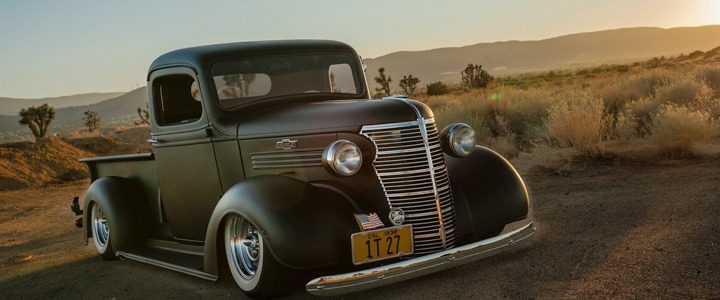
From 1934 to 1946, Chevrolet and GMC produced sturdy pickup trucks sharing similar bodies but with distinct engines; GMCs often offered more power. These pre-war and wartime trucks were simple, reliable workhorses with limited comfort features, evolving slightly over the period before a major post-war redesign.
• 1936: GMC began producing light trucks, a move to bolster sales during the Great Depression, as their primary focus had previously been on larger commercial vehicles.
• 1937-1953: The Chevrolet 216 six-cylinder engine was a common and reliable power source for both Chevrolet light trucks and cars during this period.
• 1939: The 1939 model year marked the beginning of a new body style for Chevrolet and GMC trucks (1939-1946). The dashboard design for this initial year was unique, making the 1939 glove box and windshield crank-out assembly specific to this single model year.
• 1939 onwards: GMC’s six-cylinder engines adopted a high-pressure insert bearing design, starting with 228 and 248 cubic inch displacements. This engineering difference led to GMC dash clusters typically displaying a higher maximum oil pressure reading (80#) compared to Chevrolet clusters (30#), which did not fully implement insert bearings until 1954.
• 1939-1940: Chevrolet ½ and ¾ ton tailgates featured script-style lettering. However, for other years within the 1934-1946 range, Chevrolet tailgates were plain. In contrast, GMC consistently used their logo on tailgates from 1936 to 1946.
• 1940: Sealed beam headlights were first introduced on new trucks.
• Around 1940/1941: Pickup bed floors transitioned from oak to painted hard yellow pine. On models from 1946 and earlier, this wood was painted black. Notably, between 1941 and 1946, GMC pickups used metal bed bottoms instead of wood.
• 1941-1953: A low-pressure version of the Chevrolet 235 six-cylinder engine was available for larger Chevrolet trucks. This early 235 engine was significantly different from the later high-pressure 235 used in smaller trucks.
• 1946: 3/4-ton trucks began using 8-hole split rim wheels. Earlier, they had employed a heavier 6-bolt wheel, often called the artillery or scalloped type, which differed from the ½-ton wheel design.
• Throughout the early years (specific dates vary):
* Electric wiper motors were not a standard factory option from GM.
* The 4-speed transmission (optional on ½-ton trucks) was non-synchronized, requiring double-clutching. The 3-speed transmission was synchronized in second and third gears only.
* GMC trucks with a six-volt system used a positive ground electrical system, while Chevrolet used a negative ground system.
* GMC and Chevrolet pickups shared bodies, most suspension components, and transmissions but had different engines, grilles, tailgates, exterior colors, and hubcaps.
* Dark green was the standard exterior paint color, with most other colors (including black) available as a no-cost option.
* Pickup running boards were made of black-painted steel, while rubber coverings were reserved for cars.
* Whitewall tires were not a factory option.
* The right taillight was an optional accessory, rarely installed by dealers.
* Early trucks were sometimes titled using either the body ID plate or the engine number, which could cause registration or resale issues if the engine had been replaced.